
Changing the Tactical Game: Introducing Team Instructions!
We’re very proud to introduce Team Instructions in MFL — a game-changing update that allows club owners to craft detailed tactical plans…
Changing the Tactical Game: Introducing Team Instructions!
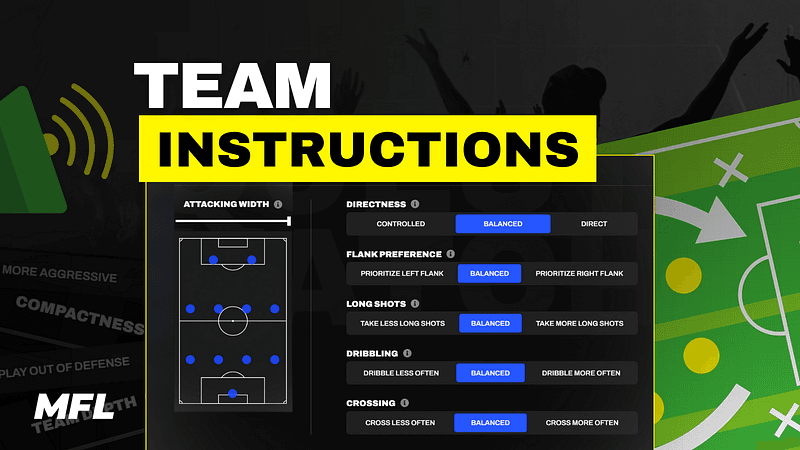
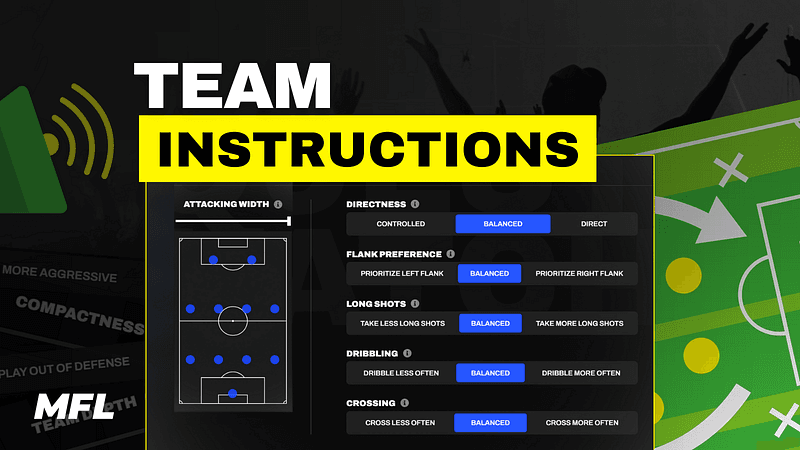
We’re very proud to introduce Team Instructions in MFL — a game-changing update that allows club owners to craft detailed tactical plans both when in possession and out of possession of the ball. This addition gives managers a new level of control, perfect for expressing their unique managerial style and truly influencing their team’s behavior on the pitch.
Let’s dive into the details, shall we?!
🎆 In Possession: Control the Attack
When your team has the ball, these settings dictate how they advance the ball and create scoring opportunities.
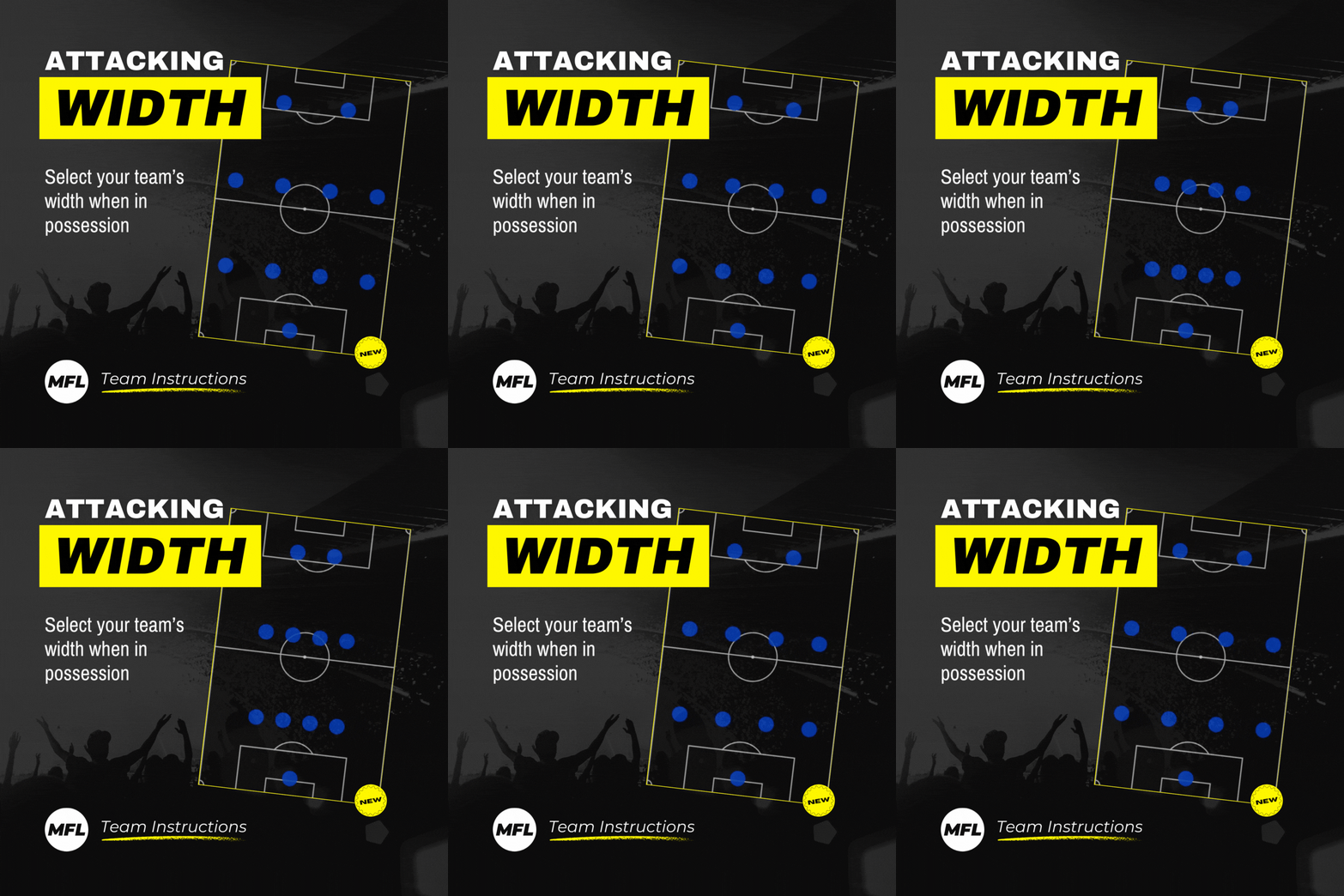
- Width ↔️Width determines how widely your team spreads out in attack. Wider settings spread the opposition’s defense and put a stronger focus on wing play, while a narrower setup concentrates attacks through the middle. You can adjust this setting using the Width slider, which allows for precise control over your team’s spatial distribution on the pitch.
- Directness 🎯
This setting allows you to control the nature of your team’s attacking approach. With the ‘Controlled’ option, your team will focus on maintaining possession and building up play methodically.
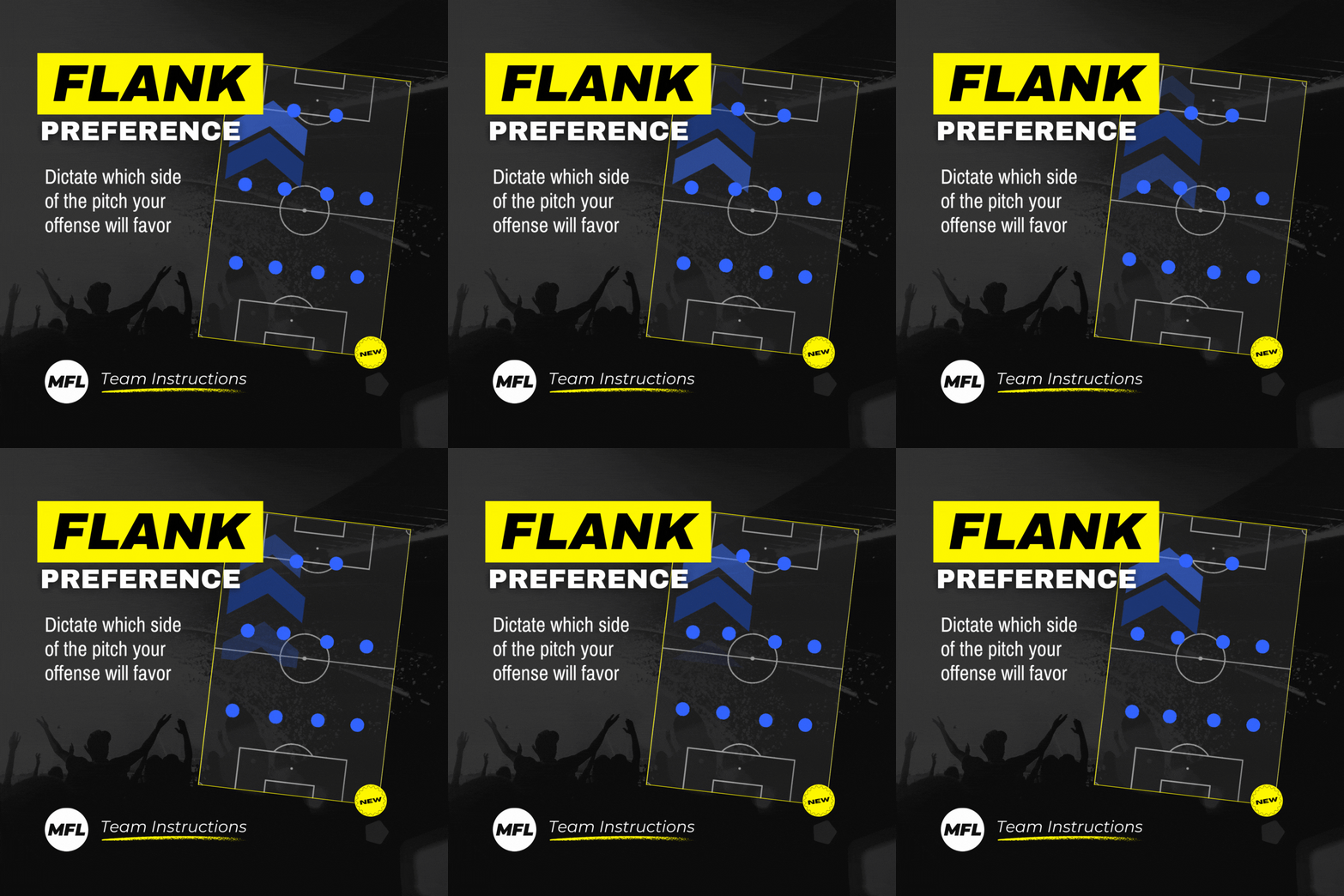
By opting for ‘Direct’, your team will want to move the ball up using fewer passes, thus increasing the likelihood of long balls and significantly reducing the incidence of backward passes . A ‘Balanced’ setting offers a mix of both, allowing your team to adapt based on the match situation. - Flank Preference ⤴️Decide whether to focus attacks down a particular side or maintain a balanced approach. Tailor this to exploit your team’s strengths or the opposition’s weaknesses on certain flanks, or instruct your players to distribute the ball evenly across the pitch by keeping a balanced approach.
- Long Shot Tendency 🚀This is a straightforward one — Want your players to attempt more shots from long distance? Toggle ‘Take more long shots’. You’ll notice more shots getting fired from outside the box and more attempts from your midfield players.
If you’d rather see your players take a more reserved approach when it comes to shooting the ball, then select ‘Take less long shots’. - Dribbling Tendency 🕺Dribbling tendency sets the frequency of dribble attempts. Higher levels encourage taking on defenders, leveraging the skills of adept dribblers. The better dribblers on the team will, of course, still attempt to get past opponents more often than their teammates would.
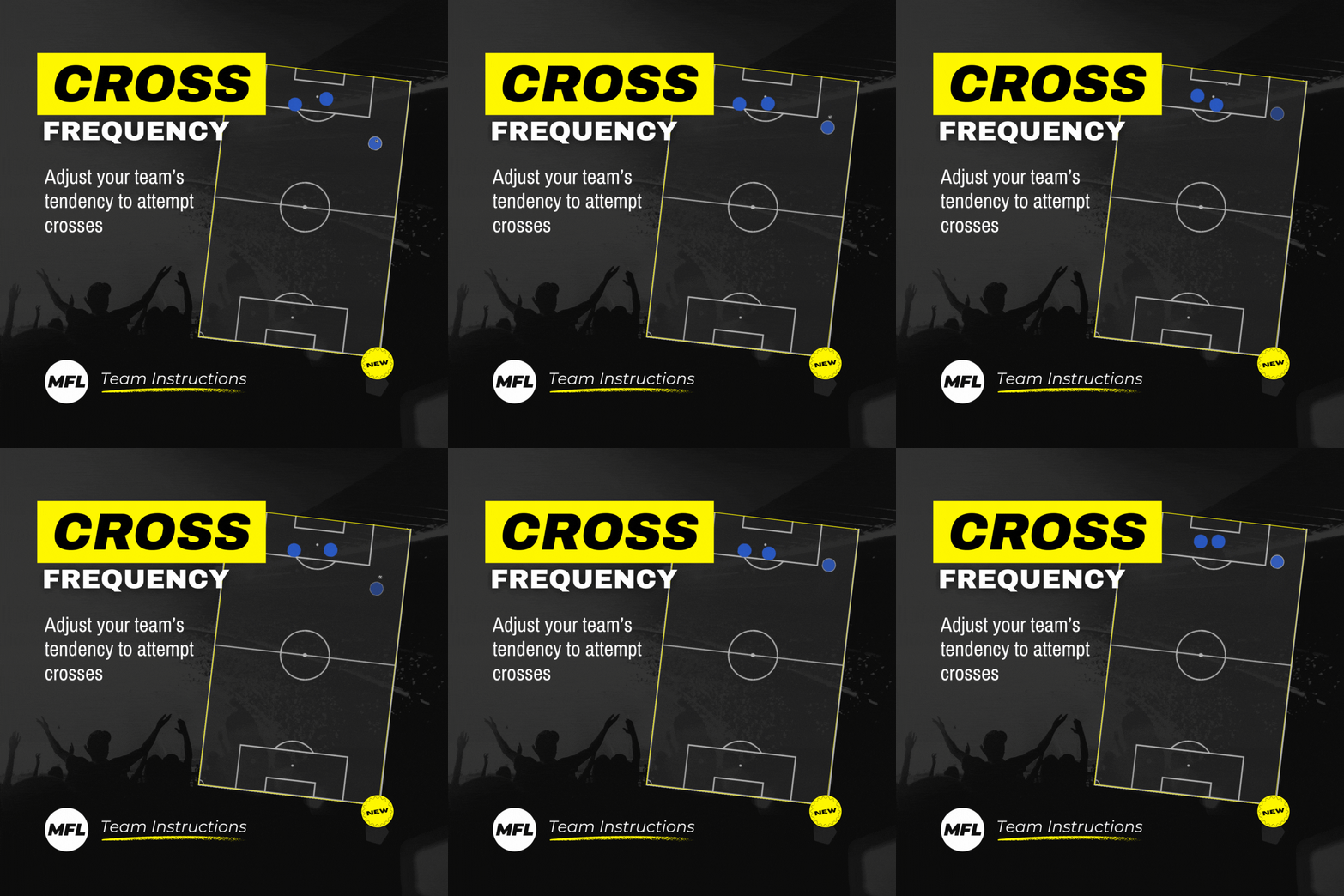
- Crossing Tendency ❎Finally, the Crossing setting controls the frequency of crosses from wide areas. You guessed it — if you select ‘Cross more often’, your players will attempt more crosses into the opponent’s box, and vice versa.
🛡️ Out of Possession: Shape Your Defense
These settings come into play when the opposition has the ball, determining how your team positions and reacts defensively.
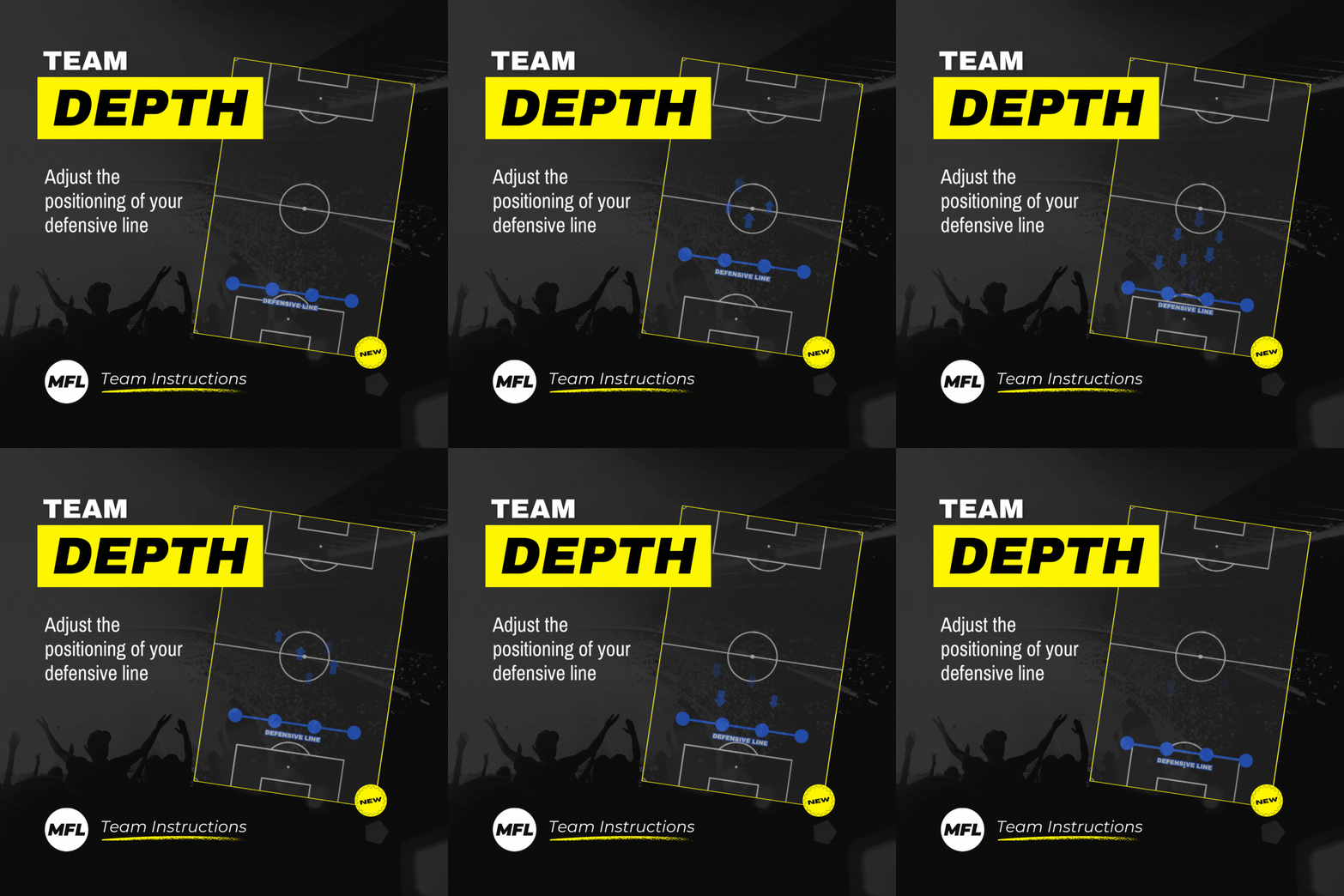
- Depth ↕️Depth dictates the defensive line’s position on the pitch. A higher line can lead to a more aggressive mentality, encouraging players to try and recover the ball quickly while laying more offside traps. A deeper defensive line generally provides more security against long balls and counter-attacks.
- Aggressiveness 💥Aggressiveness dictates the intensity of your players’ challenges. More aggressive play increases the likelihood of your players winning the ball back in 50/50 situations, but puts them at a higher risk of committing fouls and getting booked.
- Trigger Press 🛑Adjusting the Press influences not just the frequency, but also the nature of your team’s pressing behavior. When pressing, defenders will close down on the ball carrier more aggressively and quickly, often with multiple players joining the press. If you set Trigger Press to a lower frequency, your players will press less often and will tend to maintain a bit more distance, focusing on blocking passes and controlling space rather than immediately challenging for the ball.
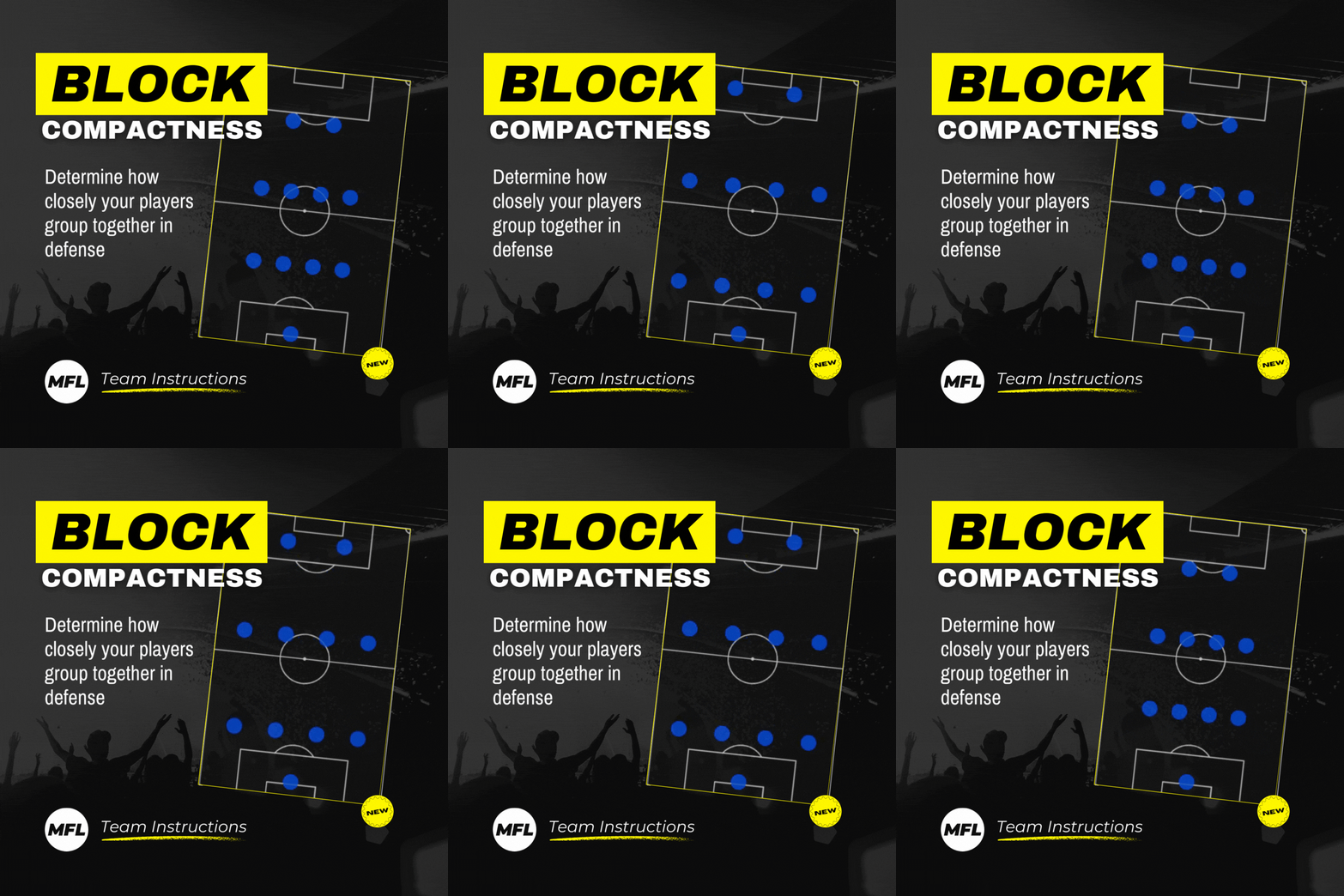
- Compactness 🧑🤝🧑This setting impacts how closely your players group together in defense, affecting the team’s ability to close spaces and resist pressure. A tighter block is harder to penetrate but may leave space out on the flanks; a more spread formation covers more ground.
- Clearances 🦵
This setting influences your team’s approach to defensive clearances. Depending on your appetite for risk and level of confidence in your team’s ability to maintain possession in difficult situations, you may elect to ‘Play out of defense’ or ‘Clear the ball often’. As with most instructions, there is also a ‘Balanced’ option. Use that to let your players decide on the best course of action to take in those situations.
In case you’re wondering…
- Will it affect energy/fatigue? How about injuries?
At the time we’re writing this, no. Fatigue does not yet change during matches, only in between, and injuries have not yet been implemented. In the future, we definitely envision some of these instructions having an impact on energy levels, likelihood of injury, and more!
- How did you test all these settings? Are they going to change in the future?
Every one of these new instructions has been subject to rigorous testing with tens of thousands of simulated matches and countless data points analyzed. Nonetheless, we look forward to monitoring live match data, and to get your feedback, in order to iterate and ensure that the team instructions are well-balanced and behaving as expected. We may also add even more team instructions in the future!
Hope this introduction provides the insight you were looking for about the new Team Instructions! Remember, the effectiveness of your strategies will not only depend on the settings you choose but also on how well they synergize with your players’ skills and the context of each match 🧠
We’re incredibly excited about this major update and cannot wait to see you all imprint your tactical philosophies onto your teams.
Stay strategic,
The MFL Team
By Lucas on January 18, 2024.
Exported from Medium on March 19, 2026.
Share this article