
180,000 Players, Reimagined: How MFL is Transforming Its Game World Using Generative AI
At MFL, we just re-generated every single player in our universe — 180,000 in total — over the span of just 3–4 days, using a highly…
180,000 Players, Reimagined: How MFL is Transforming Its Game World Using Generative AI
At MFL, we just re-generated every single player in our universe — 180,000 in total — over the span of just 3–4 days, using a highly complex generative AI pipeline running across 100+ cloud GPU pods. But this sprint was only the final stage. The real work — the workflows, tools, experiments, dead ends, breakthroughs — had been in motion for months.
We didn’t do it to chase a trend. We did it because our universe needed it.
🎯 Why We Did It
Until now, MFL players were stylized and cartoonish. It served its purpose — but it also limited how real the game could feel. This overhaul was about immersion.
We wanted a world that feels lived-in, with players that could believably exist in real football culture. Photorealism isn’t just about visuals — it changes perception. It makes MFL feel professional. It sharpens first impressions. And crucially, it opens the door to a future of dynamic storytelling and customization: custom jerseys, player aging, AI-generated video content… Have you been on the internet lately? This opens up a world where our players will someday be able to give post-match interviews, have their own social media accounts, appear in ads or interact directly with their in-game agents and managers.
⚙️ The Workflow: 400+ Nodes of Controlled Chaos
Behind the scenes, we built a sprawling pipeline of over 400 interconnected processing units (or “nodes”) — each fulfilling a specific role in the system, like individual gears in a finely tuned machine — generate characters that look real, fast, and at scale.
The entire pipeline was built using open source tools. No third-party black boxes. No rented AI APIs. Every part of the system is ours — from prompt generation to post-processing. That gives us full control, total flexibility, and zero dependency on proprietary models.
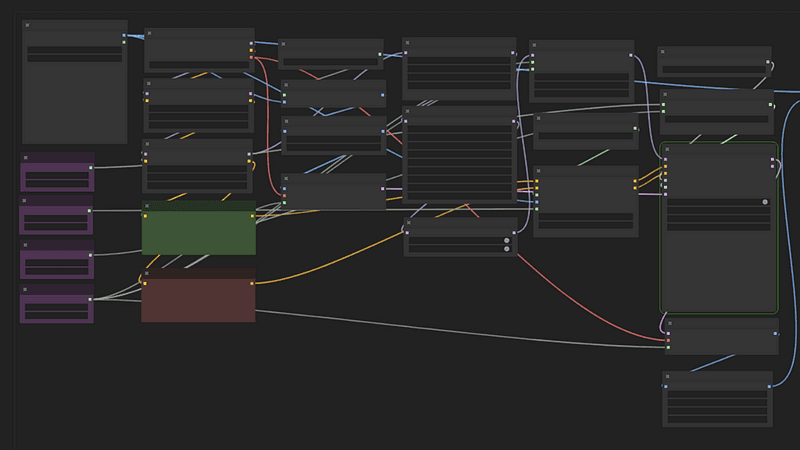
Every image passed through multiple stages: It started with a prompt engine. A smart script that randomized player traits like their body type, hairstyle, expression, and more, to build a believable, varied universe from structured randomness.
These prompts were fed to over 100 high-end GPU pods, which generated base portraits with anatomical accuracy and regional diversity.
From there, a facial refinement pass gave each player a bit more soul — polishing expressions, fixing inconsistencies, and anchoring the emotional realism of each image. And then came the kits (i.e. the jerseys they wear).
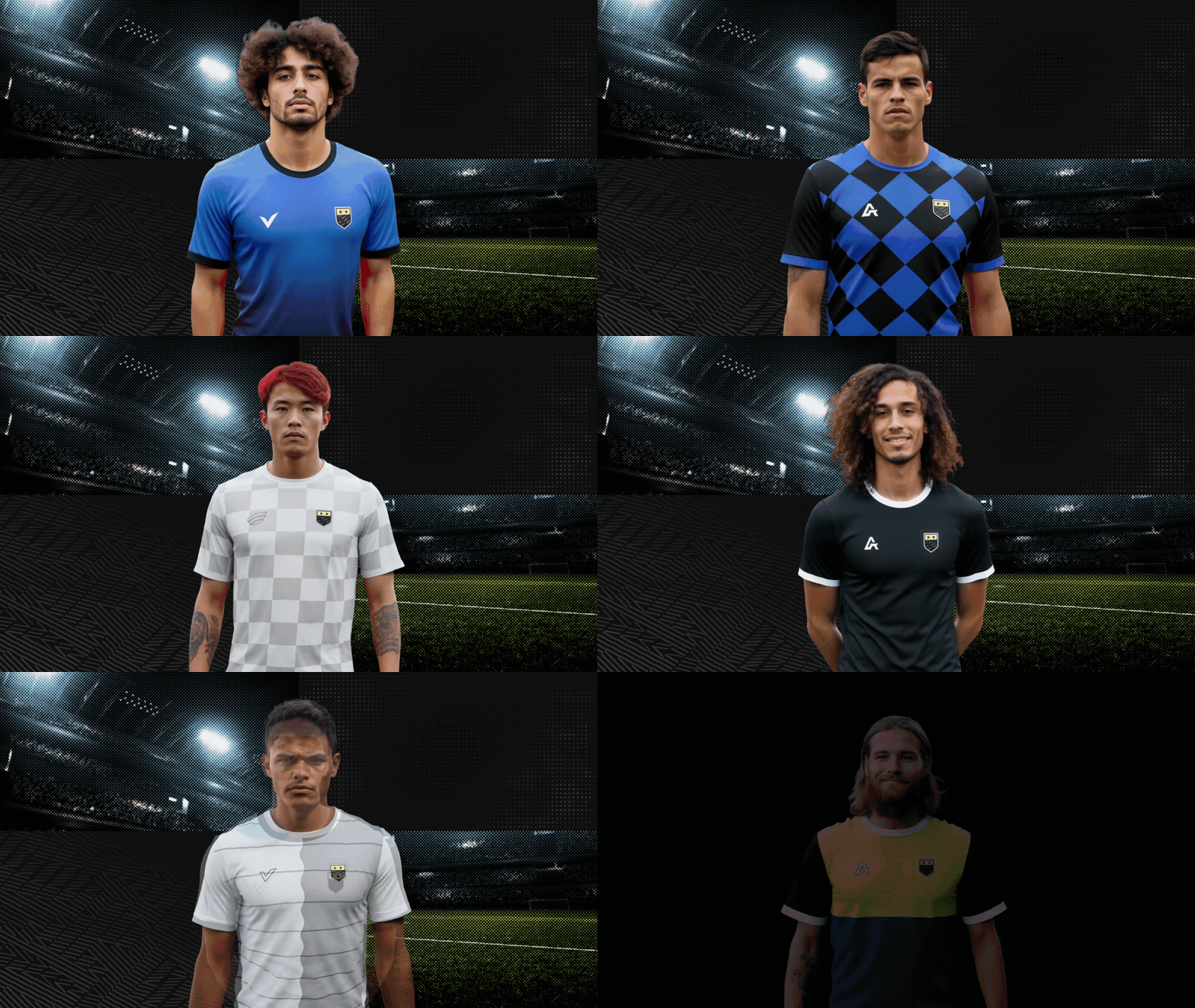
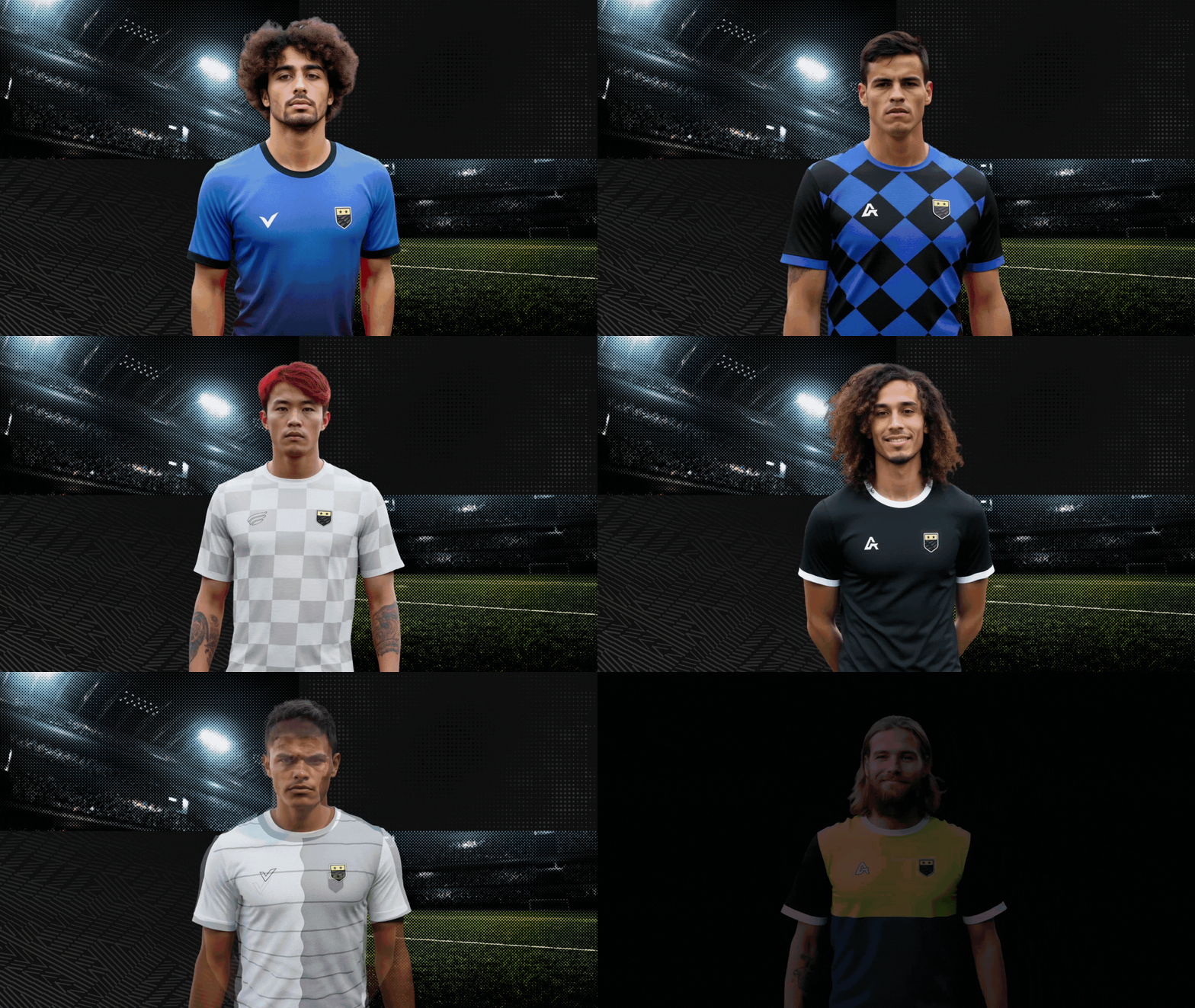
We built our own in-house 3D kit generation tool, which allowed us to design hundreds of club shirts using custom patterns, textures, and fictional brand logos. Those kits were passed back into the pipeline, and applied in a multi-step process: First, we used a segmentation model to detect the original shirt in the image, and then an advanced outpainting workflow to perform the clothing change.
Logos — small details are the first thing to break down in AI generations — were enhanced in a separate detail pass. And a second queue of GPU pods ran background removal in parallel, outputting transparent images ready for the MFL platform.
Final quality control was handled in two layers: an automated check for obvious errors, followed by a human review team working inside a custom moderation panel we built. Rejected images were auto-regenerated. No manual fixes, no bottlenecks.
📊 The Result
On the surface, it means MFL is going from cartoonish to cinematic. But in reality, it means so much more than that.
We re-rendered 180,000 footballers, each one linked to their real in-game identity, fully isolated on transparent backgrounds, and ready to be used not just in the game UI — but in video, audio, social, and any other format we dream up in the future.
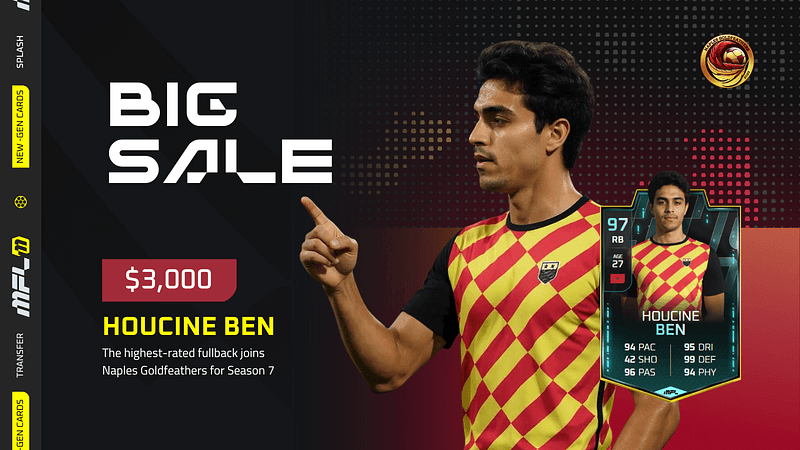
The result is a world that truly reflects the essence of MFL: one that feels alive, like a breathing, dynamic parallel universe. One with lore. With identity. With continuity. And a system flexible enough to let us evolve every one of those players season after season — from teenage prodigy to retiring legend.
By Lucas on July 30, 2025.
Exported from Medium on March 19, 2026.
Share this article